Black tea is the workhorse of the tea shelf, and three names turn up again and again: Assam, Ceylon, and English Breakfast. In the tin they look similar enough, dark wiry leaves that brew to a deep amber. In the cup they behave very differently. One is malty enough to stand beside a full cooked breakfast. Another is bright, almost citrusy, and happier with lemon than milk. The third is not a place at all, but a recipe.
If you have stood in a tea shop wondering which to take home first, here is the short version: what each one tastes like, how strong it really is, and what to put on the plate next to it.
The Three Teas at a Glance
- Assam — a region in northeast India. Malty, full-bodied, dark. The strongest of the three in the mouth.
- Ceylon — the old name for Sri Lanka. Bright, brisk, coppery, with citrus-peel notes. Medium strength.
- English Breakfast — a blend, usually Assam for body plus Ceylon for brightness. Medium to strong, built to take milk.
None of these is "better." They solve different problems, and most tea drinkers end up keeping two on the shelf.
Assam: Malty, Bold, and Made for Mornings
Assam comes from the Brahmaputra valley, where hot, humid summers and heavy monsoon rain push the bushes hard. The result is a leaf with real weight behind it. The signature note is malt: imagine toasted bread crust, or the sweetness of a dark beer, with a grainy edge underneath. Summer-picked leaves, often sold as second flush, tend to carry the deepest malt.
In the mouth, Assam is thick, almost syrupy, and finishes with a firm astringency that dries the tongue slightly. This is a tea that does not disappear when you add milk. In fact, a splash of milk softens the tannins and brings the malt forward, which is why Assam sits at the base of most everyday British-style blends and nearly every masala chai. It has the backbone to carry milk, sugar, and spice all at once without turning thin.
Choose it if you find lighter teas watery, if you drink your tea with milk, or if you want something that tastes like a proper start to a cold morning.
Ceylon: Bright, Brisk, and Lighter on Its Feet
Sri Lankan tea is usually described as bright, and that is the right word. Where Assam is round and heavy, Ceylon is clean and brisk, brewing to a coppery red with flavors that lean toward citrus peel, sometimes with a floral or faintly woody note. Altitude shapes it: high-grown Ceylon from the central hills is more delicate and aromatic, while low-grown tea is darker and more straightforward.
Strength sits in the middle. Ceylon has plenty of tannin, so it can turn sharp if you walk away and let it steep, but it never has Assam's density. That makes it the most flexible of the three. It is perfectly good with a little milk, but it does not need it, and it is the best candidate for iced tea because the brightness stays clear when chilled instead of turning muddy.
Choose it if you drink your tea plain, if you like lemon, or if you want a pot that works equally well hot at four o'clock and poured over ice at six.
English Breakfast: A Blend, Not a Region
There is no English Breakfast garden. The name describes a style of blend, and recipes vary from brand to brand, but the classic build is Assam for malt and body with Ceylon for brightness and a cleaner finish. Kenyan leaf sometimes joins them, adding a brisk, faintly fruity top note.
The whole point is consistency. A blend can taste the same in January and July even when a single harvest does not, and it can be designed to stand up to milk without becoming dull. That is what people mean when they call it well rounded: it is deliberately balanced rather than naturally so.
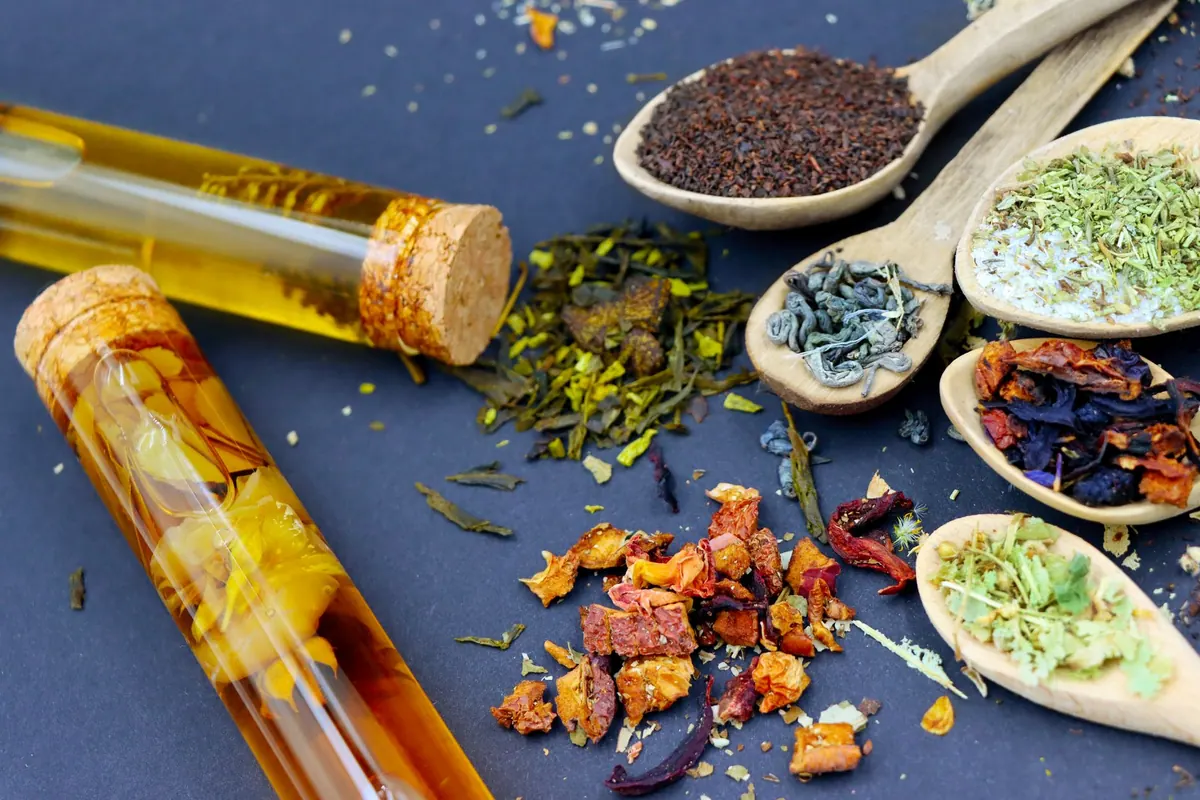
Want a clue about which way a particular brand leans? Look at the dry leaf. Darker, more uniform pieces usually mean a heavier Assam base. Lighter, more mixed pieces suggest more Ceylon in the mix.
What to Eat With Each
- Assam: full cooked breakfast, buttered toast, dark chocolate, ginger biscuits, aged cheddar. Anything rich enough to match its weight.
- Ceylon: cucumber sandwiches, scones with jam, shortbread, fruit tarts, madeleines. Keep the food light so the tea stays the star.
- English Breakfast: the middle path. Toast and marmalade, a slice of plain cake, oat biscuits, or a bacon sandwich if you want the tea to cut through the salt.
One rule of thumb: the heavier the food, the more malt you want in the cup. If a pairing tastes flat, the tea is usually too light rather than too weak.
Brewing Each One Well
- Start with fresh water. Black tea wants water at or just off a rolling boil. Water that has been sitting in a warm kettle all afternoon tastes flat no matter what leaf you use.
- Measure roughly one teaspoon of leaf per cup, or about two to three grams per 200ml if you have scales.
- Steep three to five minutes. Ceylon is happiest at three to four, Assam at four to five. English Breakfast sits in the middle, depending on the blend.
- Fix bitterness with time, not leaf. If the cup is harsh, shorten the steep before you reduce the amount of tea. Cutting leaf too far gives you a weak, hollow cup instead of a smooth one.
- Add milk after pouring, and only if you want it. Assam and most English Breakfast blends welcome it; Ceylon often does not need it.
All three contain caffeine, in broadly similar amounts, so if caffeine is something you monitor for health reasons, it is worth checking with a doctor or pharmacist about what suits you.
A Practical Starting Point
Buy small quantities first. Tea dulls with age, light, and air, so a sealed tin kept in a cool dark cupboard will serve you better than a large bag left open near the kettle. Then do the only test that really matters: brew all three the same way, same water, same steep time, and taste them side by side. Your preference will show up quickly.
As a rough guide, reach for Assam when you want milk, weight, and warmth. Reach for Ceylon when you want clarity, lemon, or a glass of iced tea. Keep English Breakfast around as the dependable middle option that pleases a table of mixed opinions. Once you know which one you actually drink without thinking, you have found your house tea, and everything else is just variety.
Photo: Marta Branco / Pexels